Business Directories USA: Which to Claim First in 2026
Published August 17, 2026
Business Directories USA: Which to Claim First in 2026

Claim your Google Business Profile, Apple Business Connect, Bing Places, Facebook Business Profile, and Yelp listing before doing anything else with your local marketing. Those five platforms feed the map results and search snippets that decide whether a nearby customer finds you or your competitor first. Everything else on the long list of U.S. business directories matters, but it matters less, and it matters later.
Here’s what to do in the next seven days:
- Claim and verify all five core profiles listed above, starting with Google Business Profile since it drives the most local search traffic.
- Confirm your name, address, and phone number (NAP) match exactly across every platform, down to abbreviations like “St.” versus “Street.”
- Upload at least 10 real photos of your storefront, team, or work to each profile.
Pro Tip: Do the core five yourself this week using our Local SEO Checklist Tool to track progress, then decide whether the remaining 20+ directories are worth your time or a job for a citation-management service.
Key Takeaways
Claiming the five core directories, keeping NAP data consistent, and maintaining listings monthly drives more local visibility than chasing every directory on the internet.
| Point | Details |
|---|---|
| Claim the core five first | Google Business Profile, Apple Business Connect, Bing Places, Facebook, and Yelp drive the most search and map visibility. |
| NAP consistency is non-optional | Mismatched name, address, or phone details across platforms confuse both customers and search algorithms. |
| Prioritize by business type | Service-area businesses need Angi and Nextdoor; professional services need BBB.org and Trustpilot. |
| Maintain on a schedule | Monthly review checks plus quarterly full audits keep listings accurate long-term. |
| Outsource when it makes sense | Localseobot manually builds premium citations and tracks Maps rankings for owners who’d rather not do it themselves. |
Table of Contents
- Top Free Business Directories USA: Side-by-Side Comparison
- How Do You Claim and Verify a Business Listing?
- Which Directories Should You Prioritize First?
- Should You DIY Listings or Use a Distribution Service?
- How Do You Keep Business Listings Accurate Over Time?
- If You’d Rather Outsource: Local SEO Bot’s Listing and Citation Services
- Sources
Top Free Business Directories USA: Side-by-Side Comparison
Not every directory on the internet deserves your time. Some feed Google Maps directly. Others sit in a database nobody searches. The difference matters more than most “top 50 directories” lists let on.
The table below breaks down the platforms that consistently show up in local SEO recommendations, based on how they’re actually used by searchers and how they connect to the platforms that matter for visibility.
| Directory | Best For | Cost | Verification Style | Authority Impact |
|---|---|---|---|---|
| Google Business Profile | All local businesses | Free | Postcard, phone, email, or instant | High |
| Apple Business Connect | Storefronts, service-area businesses | Free | Business verification via Apple ID | High |
| Bing Places | All businesses (secondary search engine) | Free | Phone, email, or auto-sync from Google | Medium |
| Facebook Business Profile | Retail, restaurants, service businesses | Free | Instant with page setup | Medium |
| Yelp | Restaurants, retail, home services | Free (paid ads optional) | Postcard or phone | High |
| BBB.org | Trust-focused, B2B, established businesses | Free (paid accreditation available) | Business documentation review | Medium |
| YellowPages.com | Broad national coverage | Free (paid featured listings) | Automated with manual claim option | Medium |
| Foursquare | Location-based discovery, restaurants | Free | Email verification | Low to medium |
| Manta | Small business, B2B | Free (paid upgrades) | Email verification | Low |
| Angi | Home services, contractors | Free (paid lead generation) | Background/license check for pros | Medium |
| Nextdoor | Local service providers, neighborhood businesses | Free (paid ads optional) | Address verification | Medium |
| Trustpilot | Reputation-focused, ecommerce, service firms | Free (paid business plans) | Domain verification | Medium |
| Brownbook.net | Broad general coverage | Free | Email verification | Low |
| ChamberOfCommerce.com | Local credibility, established businesses | Free (paid featured listings) | Business registration check | Low to medium |
Here’s how to think about priority when you’re staring down this list with limited time:
- Core (claim this week): Google Business Profile, Apple Business Connect, Bing Places, Facebook Business Profile, Yelp.
- Review-focused (claim week two): BBB.org, Trustpilot, Nextdoor.
- Niche (claim within the month, if relevant to your industry): Angi for home services, Manta for B2B.
- Broad aggregators (lower priority, still worth doing): YellowPages.com, Foursquare, Brownbook.net, ChamberOfCommerce.com.
Google Business Profile anchors the entire list because it’s the direct feed for Google Maps and the local pack. Google’s own setup process walks through creating or claiming a profile, personalizing it with photos and details, then actively managing it with posts and review responses. Apple Business Connect works the same way for Apple Maps and Siri results, which matters more than most owners realize now that iPhone users constitute a significant portion of the U.S. smartphone market.
Yelp still drives significant foot traffic for restaurants and home services, even though its influence on Google rankings is indirect. BBB.org carries a different kind of weight. It’s less about search visibility and more about the trust signal it sends to a customer comparing three contractors before picking up the phone.
YellowPages.com and similar broad directories work differently than the platform-driven listings above. Yellow Pages USA reports indexing tens of millions of businesses, which shows how these large national directories aim for coverage rather than curation. Volume alone doesn’t equal SEO value. It just means you’re one line in a massive database instead of an actively managed profile.
How Do You Claim and Verify a Business Listing?
Claiming your core listings takes an afternoon if you have your business details organized. Here’s the sequence that avoids the most common holdups.
- Google Business Profile: Search your business name on Google Maps first to check for an existing unclaimed listing, then follow this step-by-step guide for SMBs on managing your online reputation to handle reviews effectively. If none exists, go to Google’s Business Profile page and create one. Verification usually happens instantly by phone or email, though some categories require a postcard mailed to your business address, which takes 5 to 14 days.
- Apple Business Connect: Sign in with an Apple ID at Apple Business Connect and search for your business. Verification runs through Apple’s own review process and typically completes within a few business days once your address and phone number match public records.
- Bing Places: You can import your entire Google Business Profile directly into Bing Places, which cuts setup to about five minutes. Manual verification without that import takes a phone call or a short waiting period for email confirmation.
- Facebook Business Profile: Create a business page (not a personal profile), add your category, address, and hours, then verify your identity if Facebook flags the page for review. This is usually instant.
- Yelp: Search for your business, claim it if it already exists (most businesses already have a Yelp listing whether they built it or not), and verify by phone or postcard. Phone verification is nearly always faster.
Once you’ve claimed a profile, don’t stop there. Immediately fill in:
- Exact business name, address, and phone number matching every other listing.
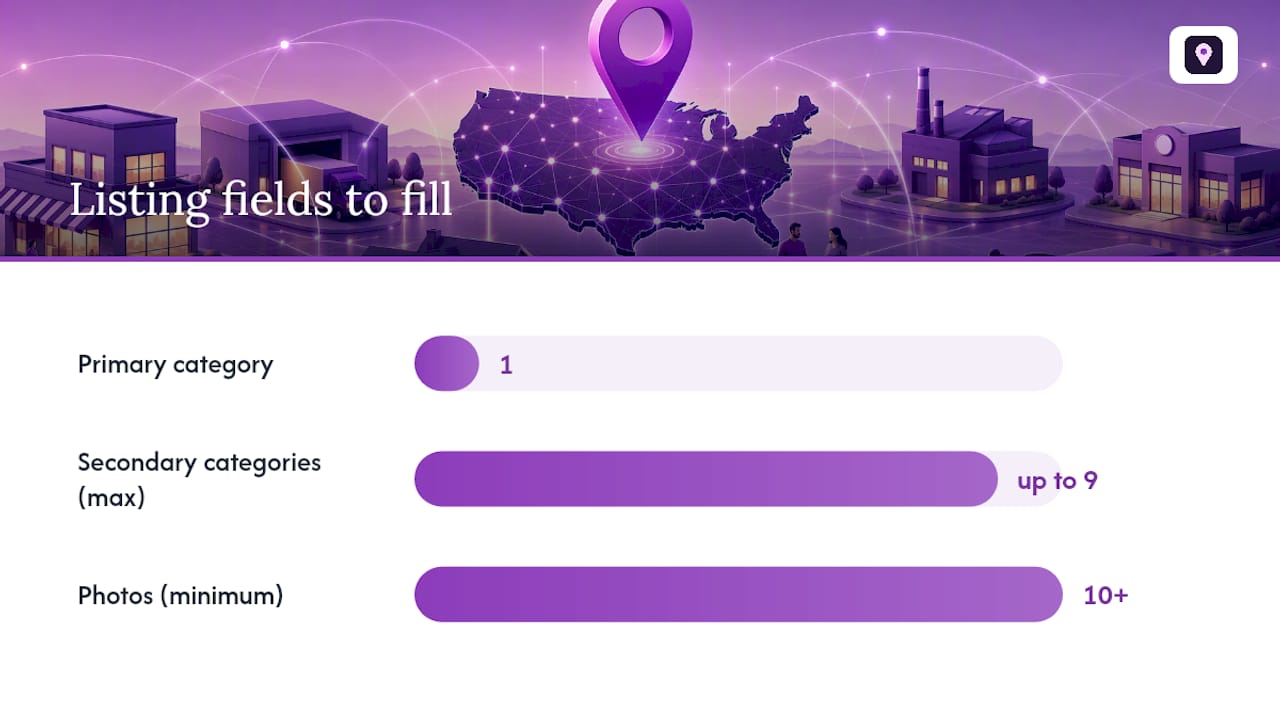
- Primary category and up to nine secondary categories where the platform allows it.
- Accurate hours, including holiday hours where the platform supports it.
- At least 10 photos, plus your website and a description that mentions the services you actually perform.
- Service-area settings if you don’t have a walk-in storefront.
Pro Tip: Verification fails most often when your business address doesn’t exactly match what’s on your utility bill or lease. Fix that mismatch before you submit, not after you get rejected.
If a listing shows as “already claimed” by someone else, most platforms including Google Business Profile offer a formal dispute process to request access. Duplicate listings are more common than owners expect, especially for businesses that moved locations or changed names, so search variations of your business name before assuming a clean slate.
Which Directories Should You Prioritize First?
The right claiming order depends on what kind of business you run, not just how popular a directory is. A storefront bakery and a mobile dog groomer need different priorities even though both are small local businesses.
- Storefront businesses (retail, restaurants, salons): Core five first, then Yelp reviews, then Nextdoor for neighborhood word-of-mouth.
- Service-area businesses (plumbers, electricians, cleaners): Core five plus Angi and Nextdoor, since customers in these categories search by service type rather than walking past a storefront.
- Professional services (law, accounting, consulting): Core five plus BBB.org and Trustpilot, since trust signals outweigh map visibility for high-consideration purchases.
- Multi-location businesses: Core five for every location individually, then evaluate a distribution service to keep dozens of listings consistent without manual repetition.
Here’s a realistic timeline for getting through the list without burning a weekend:
- Week 1: Claim the core five platforms and confirm NAP consistency across all of them.
- Week 2: Claim review-focused platforms (BBB.org, Trustpilot, Nextdoor) and request your first round of customer reviews.
- Month 1: Fill in niche directories relevant to your category (Angi for home services, Manta for B2B) and broad aggregators like YellowPages.com and ChamberOfCommerce.com.
A home services contractor gets more return from Angi than from Trustpilot. A reputation-sensitive law firm gets more from Trustpilot than from Angi. Match the directory to the customer behavior in your category rather than working straight down a generic popularity list.
Should You DIY Listings or Use a Distribution Service?
Three approaches exist for getting your business listed across the directory landscape, and they suit different situations. Understanding the tradeoffs before you pick one saves you from re-doing the work later.
Manual claiming means you personally create and verify each profile. It costs nothing but your time, and it gives you full control over accuracy. This works fine for a single-location business with a free afternoon.
Listing-sync platforms push your business data out to a network of partner directories automatically. EZlocal is a common example, offering free listings with syncing to a set number of citation sites and paid tiers that distribute to hundreds more. This trades some control for speed. It works well when you need broad coverage fast and don’t need every listing hand-tuned.
Managed or manual citation services involve a person or team building and maintaining your listings on high-authority directories by hand, rather than pushing data through an automated feed. This suits multi-location businesses, agencies managing several clients, or any owner who has tried the DIY route and doesn’t have the hours to keep 15 profiles updated every time a phone number or hour changes.

| Approach | Best For | Typical Cost | Control Level |
|---|---|---|---|
| Manual DIY | Single-location businesses | Free (your time) | Full |
| Listing-sync platform | Multi-location businesses needing fast coverage | Free tier, paid tiers for wider distribution | Moderate |
| Managed/manual citation service | Agencies, multi-location, resource-constrained owners | Monthly or per-location fee | High, without the hands-on time |
A few things to weigh before choosing:
- Manual claiming makes sense if you have one location and a few free hours this month.
- Sync tools make sense if you need broad distribution and don’t mind less precision on individual profiles.
- Manual, human-built citations make sense when accuracy and long-term authority matter more than speed, which is the case for most businesses trying to rank in a competitive local market.
Pro Tip: A manually curated listing on a high-authority directory tends to carry more trust weight than the same business name sitting in a scraped database with thousands of others. Practitioners who track this over time consistently find that hand-maintained citations on a smaller number of trusted directories outperform passive reliance on automated entries.
How We Selected and Prioritized These Directories
Directories made this list based on five criteria: integration with Google Maps or Apple Maps search results, editorial moderation versus fully automated scraping, review volume and activity, relevance to small business categories, and syndication reach to other data aggregators.
This list was last reviewed for 2026, using primary sources including each platform’s own help documentation and public claim pages.
- Search and Maps integration weighed heaviest, since that’s where most local customers actually look.
- Editorially verified directories outranked large automated databases in priority, even when the database claimed more listings.
- Review volume and category relevance served as tiebreakers between similar platforms.
Large volume directories look impressive on paper. CompanyData advertises tens of millions of U.S. business listings, but a database built for exports and research serves a different purpose than a profile-driven directory a customer actually browses. Bigger isn’t better if nobody’s looking.
How Do You Keep Business Listings Accurate Over Time?
Claiming your listings is the easy part. Keeping them accurate for the next three years is where most small businesses fall behind, usually because nobody owns the task after the initial setup.
Run a maintenance cycle on this schedule:
- Monthly: Check your Google Business Profile for new reviews and respond within 48 hours. Scan for obvious errors in hours or contact info.
- Quarterly: Run a full audit across all claimed directories checking for duplicate listings, NAP inconsistencies, category drift, and outdated photos.
- After any business change: Update every platform immediately if you move, change your phone number, or adjust your hours permanently.
Track these metrics to know whether the work is paying off:
- Map Pack appearances and position for your target search terms.
- Calls, clicks, and direction requests from your Google Business Profile.
- Review count and average rating across Google, Yelp, and BBB.org.
- Referral traffic from directory listings showing up in your website analytics.
If you find a duplicate listing, most platforms let you claim or merge it directly from the profile settings; if you find an incorrect listing you don’t control, request removal through the platform’s support form rather than leaving it live to confuse both customers and search algorithms. Our Local Citation Finder helps surface duplicates you might not know exist.
A Small Business Owner’s To-Do List for This Week
Here’s the plan if you’re doing this yourself: claim your three core profiles (Google, Apple, Facebook), add 10 real photos across them, and text five recent customers asking for a review. That’s it for week one.
Hand off the photo uploads to whoever manages your social accounts if you’re stretched thin, and consider paid help once you’re managing more than two locations. Small, consistent wins beat one exhausting weekend of catch-up work every time.
If You’d Rather Outsource: Local SEO Bot’s Listing and Citation Services
If claiming and maintaining a dozen directories sounds like a job you’d rather hand off, that’s exactly the gap Localseobot fills. Instead of automated syncing that pushes your data to hundreds of low-quality directories at once, Localseobot manually builds premium citations on high-authority platforms, the same kind of curated, hand-verified listings this article has argued outperform scraped database entries.
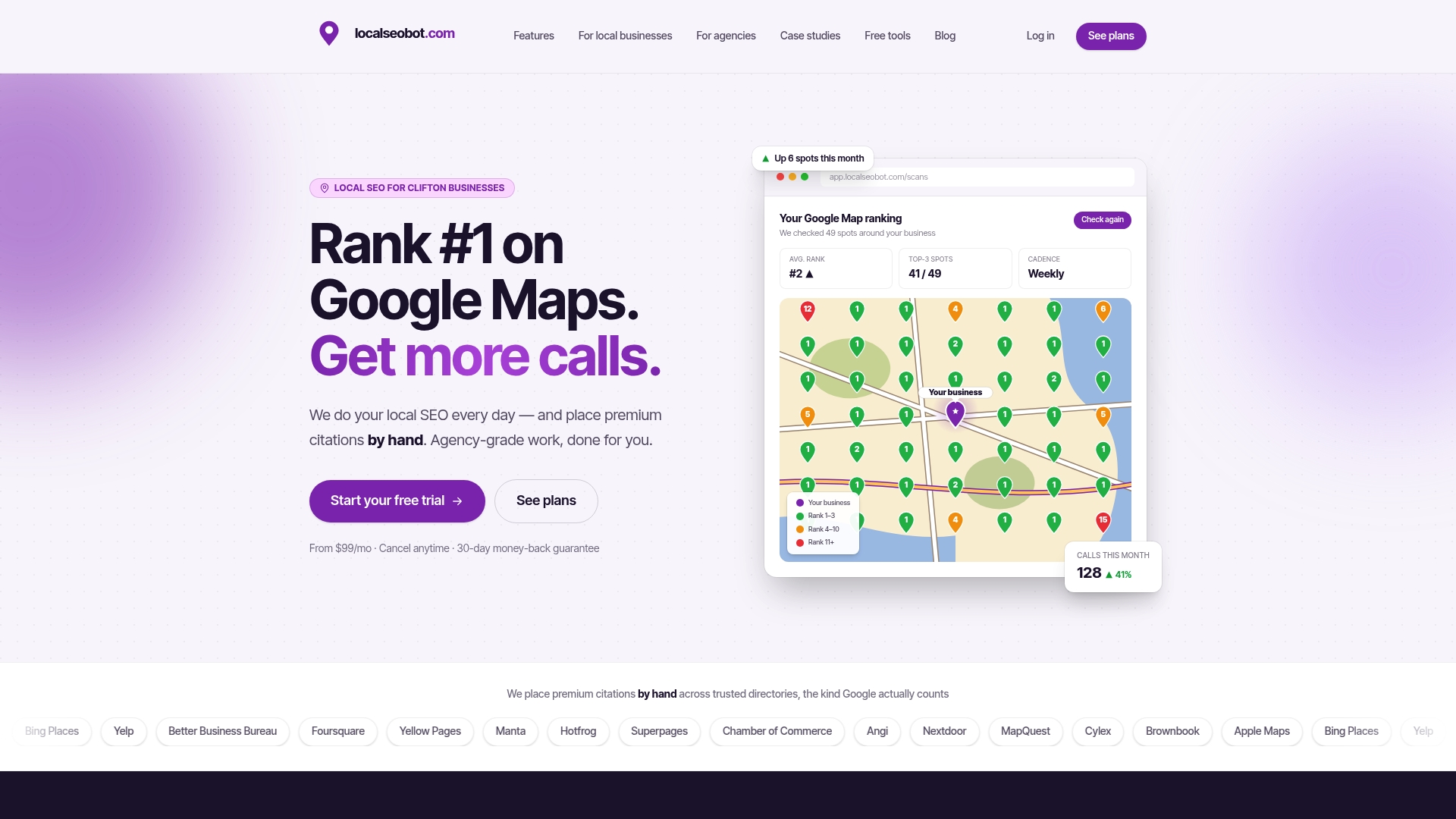
This approach makes sense once you’re managing more than one location, running low on hours, or scaling fast enough that manual upkeep stops being realistic. Localseobot pairs that manual citation work with Google Maps rank tracking, automated review generation, and Google Business Profile optimization, so your core listing keeps improving after the initial claim instead of sitting static for a year. The company backs its work with a 30-day money-back guarantee if you don’t see a ranking increase.
Start by checking where your current listings stand with the Local SEO Checker, then explore the Local Search Engine Optimization Service if you decide manual upkeep isn’t worth your time anymore.
Sources
- Get Listed on Google - Google Business Profile
- Yellow Pages USA — America’s Business Directory
- USA Business Directory — 69M+ US Businesses | CompanyData